
How sun, snow and road salt wear down cars in Colorado Springs
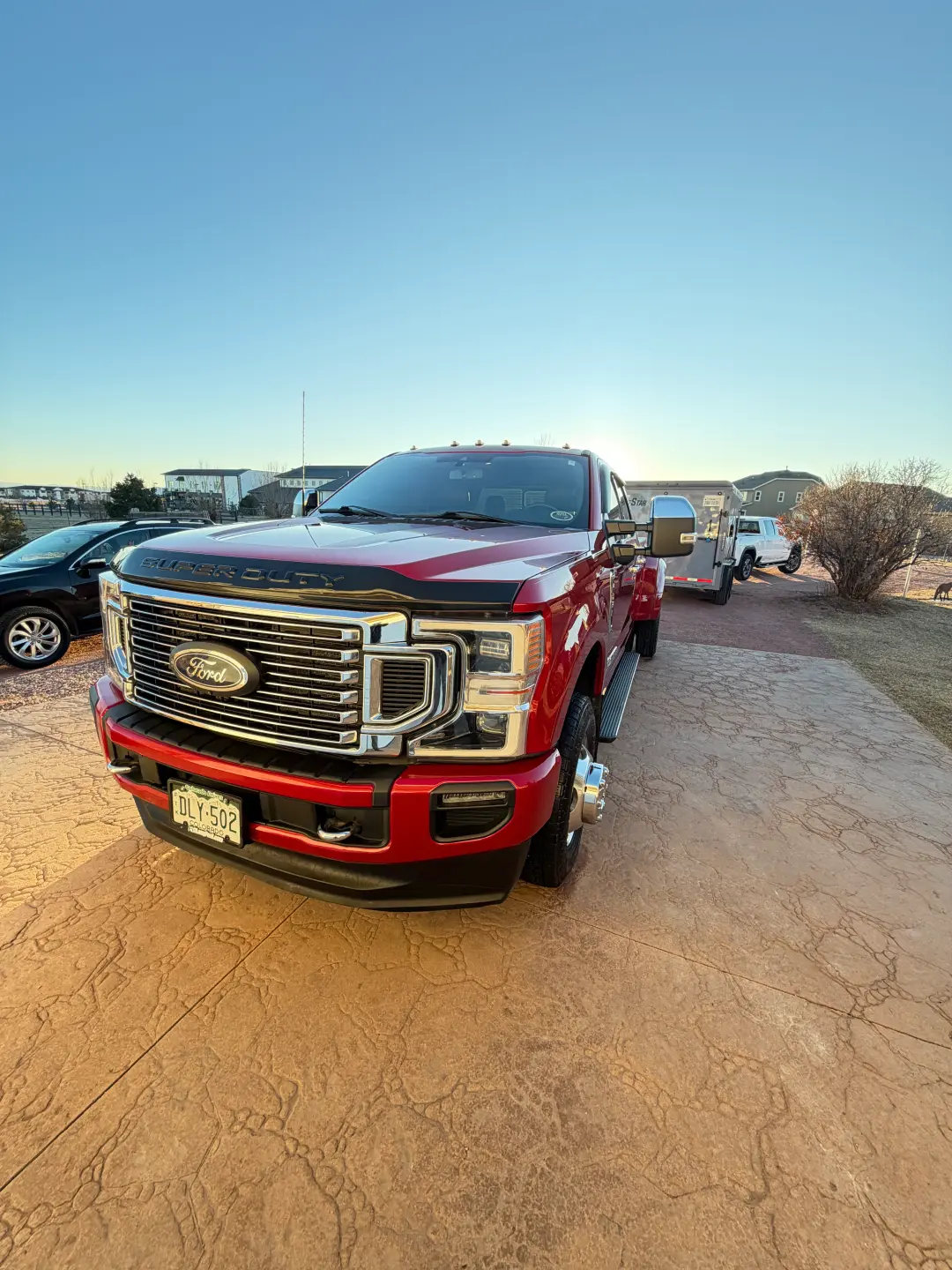
In Colorado Springs, a car takes hard sun most of the year, de-icer from December to February, and hail from April to September. Each one works on a different part of the car. A wash in the right month and a layer of protection on the paint keep most of it from turning into a repair.
Why is the sun so hard on cars in Colorado Springs?
Because the city sits at 6,011 feet, more than a mile above sea level (source). A local detailer counts about 243 sunny days a year (source). That is a lot of time with UV hitting the same panels.
You see it first in three places:
- Clear coat on the roof, hood and trunk. These flat panels face the sky all day. They turn dull and chalky before the doors do.
- Black plastic trim. Bumper trim and window seals fade from black to gray.
- The dashboard. A car parked facing west at work bakes its dash every afternoon. Vinyl dries out and can crack.
Wax wears off fast in that sun. A ceramic coating lasts longer and gives the clear coat a hard layer to take the hit. If the paint is already dull, paint polishing brings back the gloss before anything goes on top.
What does road salt and magnesium chloride do to a car?
It eats at metal you rarely look at. A local detailer reports that CDOT relies heavily on magnesium chloride de-icer, which is corrosive to the undercarriage, brakes and exposed metal (source). The same source puts snowfall at 32 to 57 inches a year, with de-icer on the roads from December to February.
Liquid de-icer clings. It dries into a white film on lower doors, wheels and rocker panels, then turns wet again with the next storm. Each wet spell gives it another chance to work into seams and chips.
The swings make it worse. Winter days here can start in the teens and reach the 50s by afternoon. That freeze and thaw stresses paint and rubber seals, and every melt carries more grime onto the car.
What helps:
- Rinse the lower half after a storm. Wheels, wheel wells and rocker panels hold the most de-icer.
- Wash on a warm afternoon. Water that freezes in door jambs and locks causes its own problems.
- Seal the paint before December. A coated car sheds film and grime with a rinse instead of a scrub.
Does hail season change how you should care for paint?
It changes when you should do things. Hail season here runs April to September, and June is the peak month. The April 2023 storm was the costliest in El Paso County history, based on a roofer’s summary of NOAA reports (source).
Be clear about what detailing can and can’t do. No coating stops a hailstone from denting a panel. Dents go to a body or paintless dent repair specialist. What a detail can do is clean up after the storm, so leaves, dirt and grit don’t sit in fresh chips and scratches.
Spring is also when a winter’s worth of de-icer film comes off. A full detail in April or May resets the paint, wheels and cabin before the summer sun goes to work on them.
What happens inside the car during a Colorado winter?
Snow comes in on boots, melts, and soaks into the carpet. A local mobile detailer names winter moisture, salt, pets and kids as the main reasons people book interior work (source).
The pattern looks like this:
- White salt rings on the floor mats and carpet. They dry stiff and spread with each new storm.
- A musty smell by February. Damp padding under the carpet doesn’t dry with the windows up and the heat on.
- Pet hair and mud. Trail days and snowy dog walks put both deep into the fabric.
A vacuum won’t pull salt out of carpet fibers. Hot water extraction will. Our interior shampoo and odor removal is built for salt stains, pet accidents and smells that have settled into the seats.
How does washing damage paint here?
More often than most people think. One Colorado Springs detailer puts it bluntly: “most paint damage in Colorado Springs comes from washing, not driving” (source). That is their view, but the logic holds. Dry de-icer and road dust are gritty. Scrub them with a dirty mitt or a tunnel brush and you drag that grit across the clear coat.
To wash at home without adding swirls:
- Rinse heavily first, to lift loose grit before anything touches the paint.
- Use two buckets, one for soap and one to rinse the mitt.
- Dry with a clean microfiber towel, not a squeegee or a bath towel.
What can you do yourself, and when should you call a pro?
Do it yourself:
- Rinse the lower half of the car after snowstorms.
- Pull the floor mats and knock the salt off them every week or two in winter.
- Park in shade or use a windshield shade in summer.
Call a pro when:
- The paint feels rough or looks hazy. That calls for decontamination and polishing, not more soap.
- Salt has crusted into the carpet, or the cabin smells damp.
- You want protection before winter or hail season. A coating goes on clean, dry, decontaminated paint, and prep is most of the job.
A simple year for a car in the Springs
| When | What to do | Why |
|---|---|---|
| October to November | Coat or seal the paint, clean the interior | Get ahead of de-icer and wet boots |
| December to February | Rinse the lower half after storms | Magnesium chloride sits on metal |
| March to May | Full detail and interior extraction | Clear winter film and salt stains |
| June to September | Wash after storms, shade the dash | Hail grit and peak sun |
We’re 100% mobile, so all of this happens in your driveway or at work. Every vehicle is priced on-site before we start. See the starting prices on our price list.